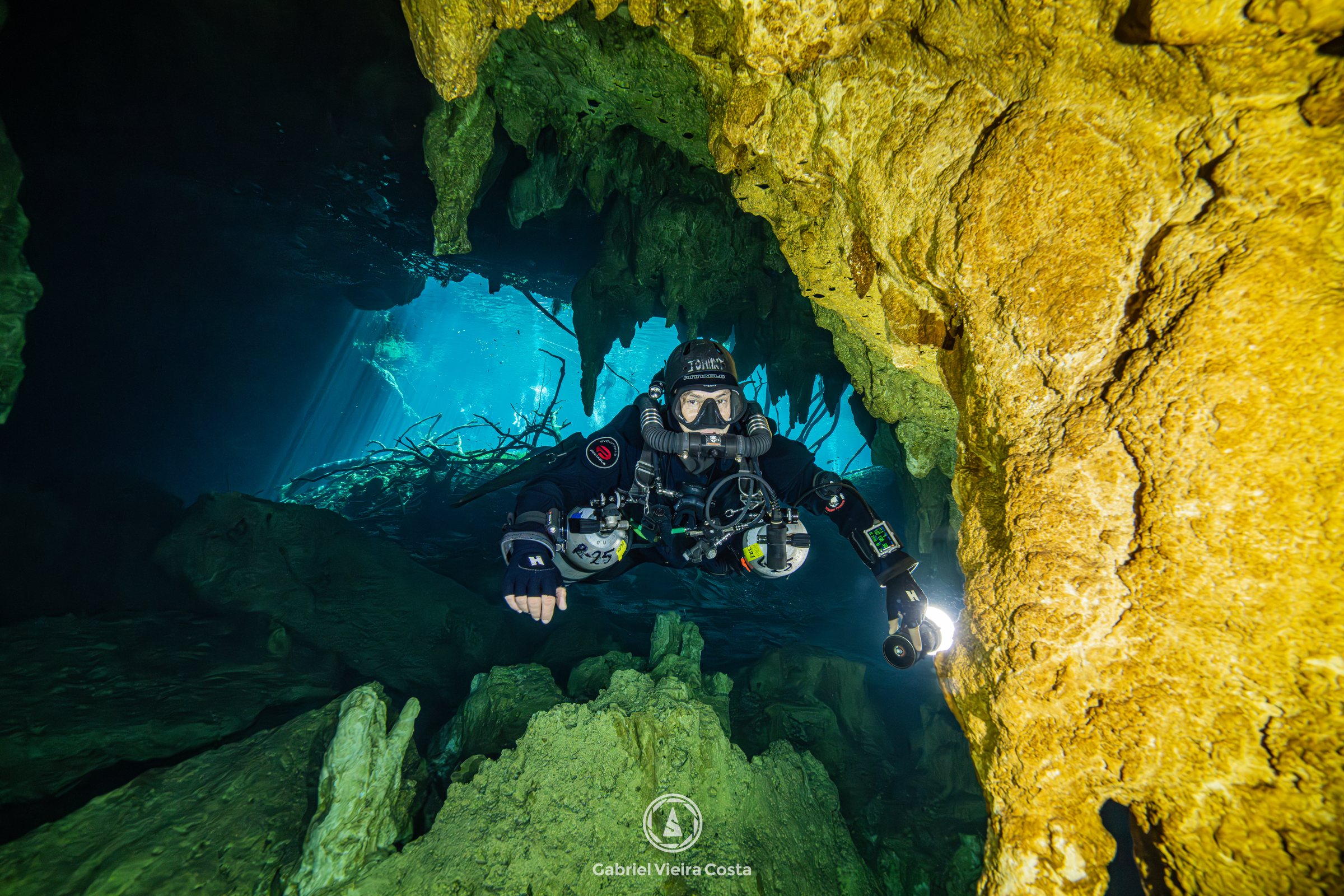
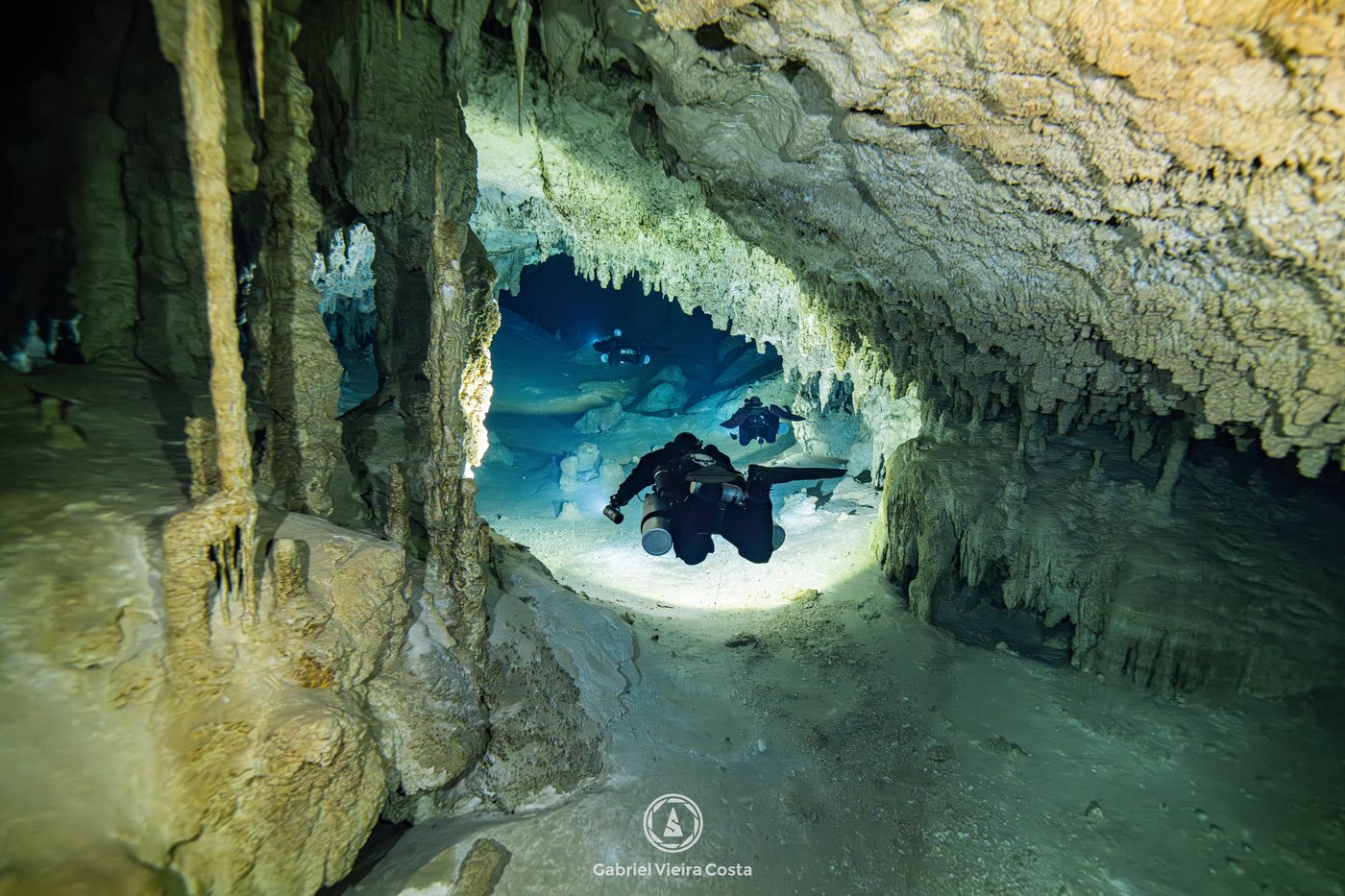
01 / Masterclass
Cave Photography
Equipment, exposure in the dark, lighting setups, working with the model and the assistant, composition and the photo dive plan. With the real numbers from my photos: lens, ISO, shutter speed and aperture.
- 01First things first
- 02Equipment
- 03Exposure in the dark
- 04The light
- 05The team
- 06Composition
- 07Planning
- 08Wrap-up
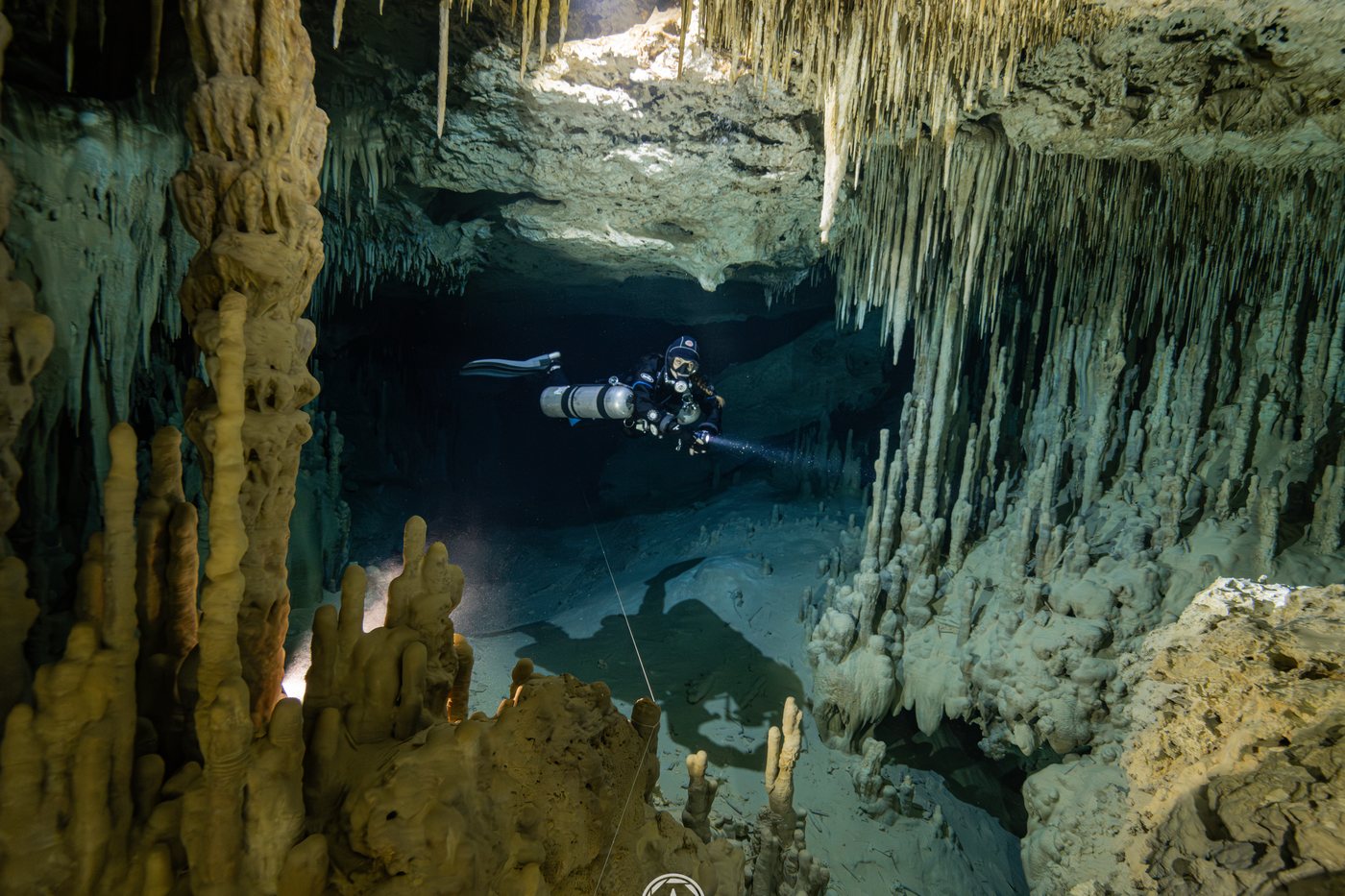
02 / Masterclass
Cave Photo Editing
The order I edit cave photos in Lightroom: high ISO noise, the color of the dive lights, the beam that blows out and the recipes for the dark and for the daylight zone. With the real panel for each photo.
- 01The method
- 02Noise
- 03Color
- 04Light
- 05Recipes
- 06Before and after
- 07Finishing
- 08Wrap-up
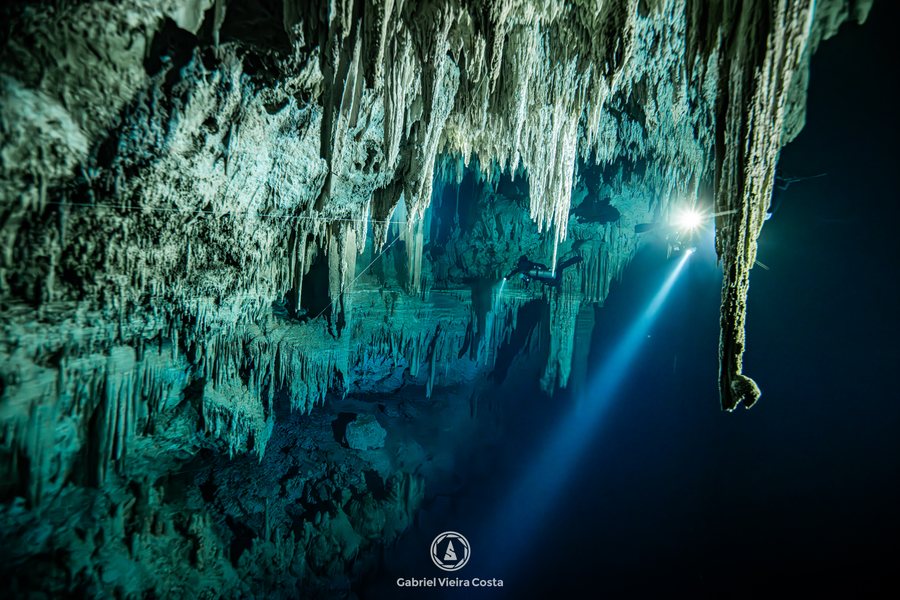
What the numbers show
I measured my cave photos, one by one.
is the median ISO. In a cave, noise can be fixed. A blurry photo cannot.
is the median Tint, versus +55 in the ocean. The light from the dive lights arrives green.
have Saturation at zero. The color comes from white balance.
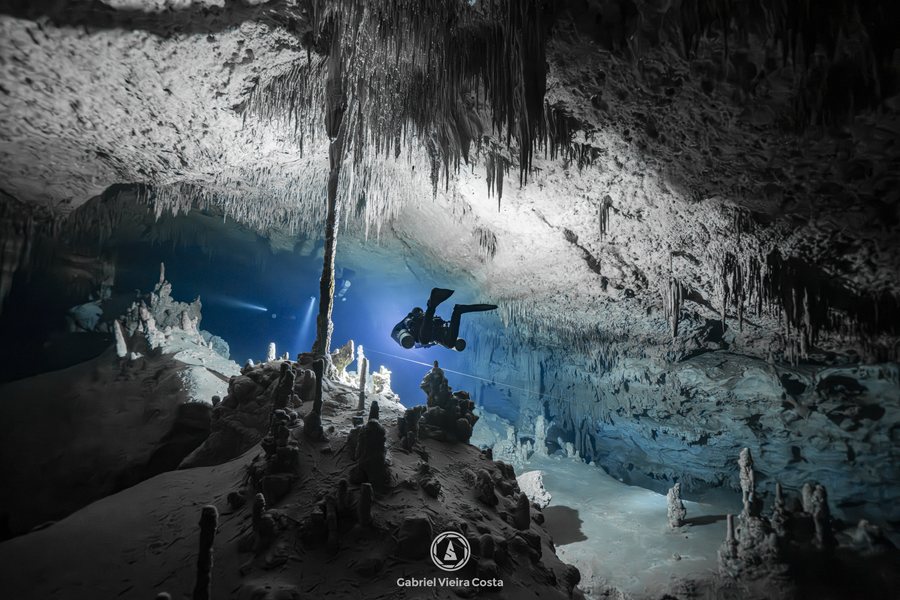
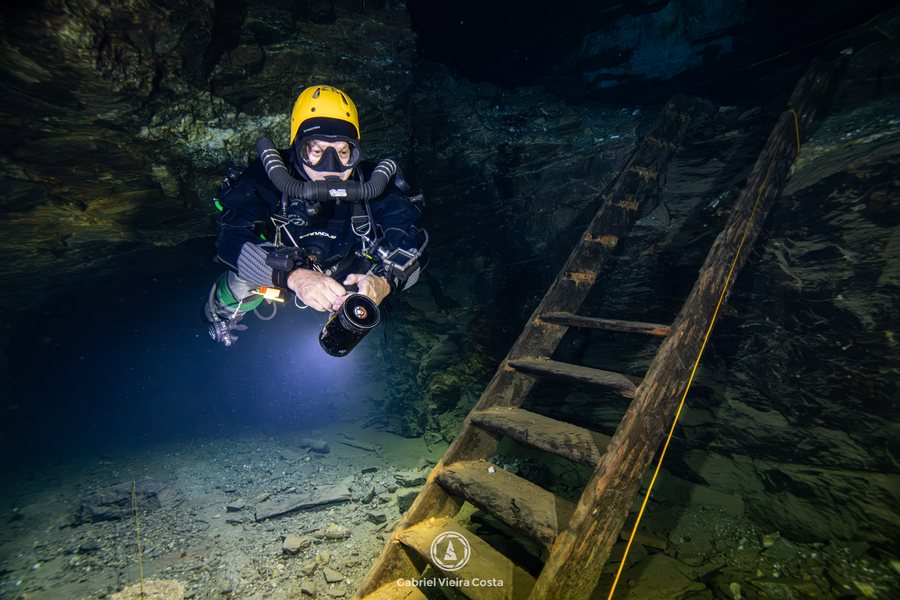
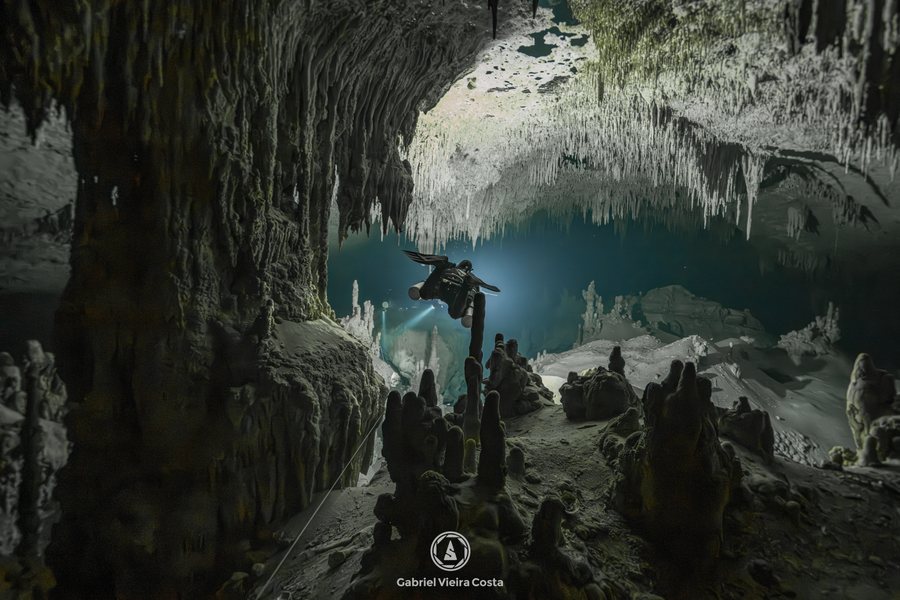
How it works
Right in your browser, nothing to install.
You buy through Hotmart, by card.
You receive the student area address and your password.
Study on your computer or phone. The site remembers the screen where you stopped.
Safety before the photo. These masterclasses do not replace a cave diving course. To shoot inside a cave, you need the certification and experience in caves. In the daylight zone of the cenotes, a cavern certification and a guide already allow plenty of good photos.
Questions
Before you buy
What language is it in?
Portuguese, English and Spanish. The same password opens all three, and you can switch language on any screen.
Is it video?
No. It is animated screens with photos, and a text explaining each one. You read at your own pace and come back whenever you want.
Do I need to be a cave diver?
To shoot inside a cave, yes. But much of the content also applies to the daylight zone of the cenotes, which calls for a cavern certification, and to wrecks and night dives.
What equipment do I need?
A camera that handles high ISO, a wide-angle lens and dive lights. I show what I use, but the technique works with any camera.
Do I need Lightroom for the editing masterclass?
Yes. The panels shown are from Lightroom, and your photos need to be RAW to get the most out of it.
I already took the Lightroom masterclass. Is it worth it?
Yes. The order is the same, but the cave changes everything: noise comes first, the color of the dive lights calls for a different Tint and the beam calls for different Highlights. These are recipes of their own, measured only on cave photos.
What if I don't like it?
You can ask for a refund within 7 days through Hotmart.
I have another question. Who do I talk to?
Write to contact@gabrielvieiracosta.com. I answer personally.
Also
Underwater photography and Lightroom editing for the ocean: see the other masterclasses.