Let the animal come to you
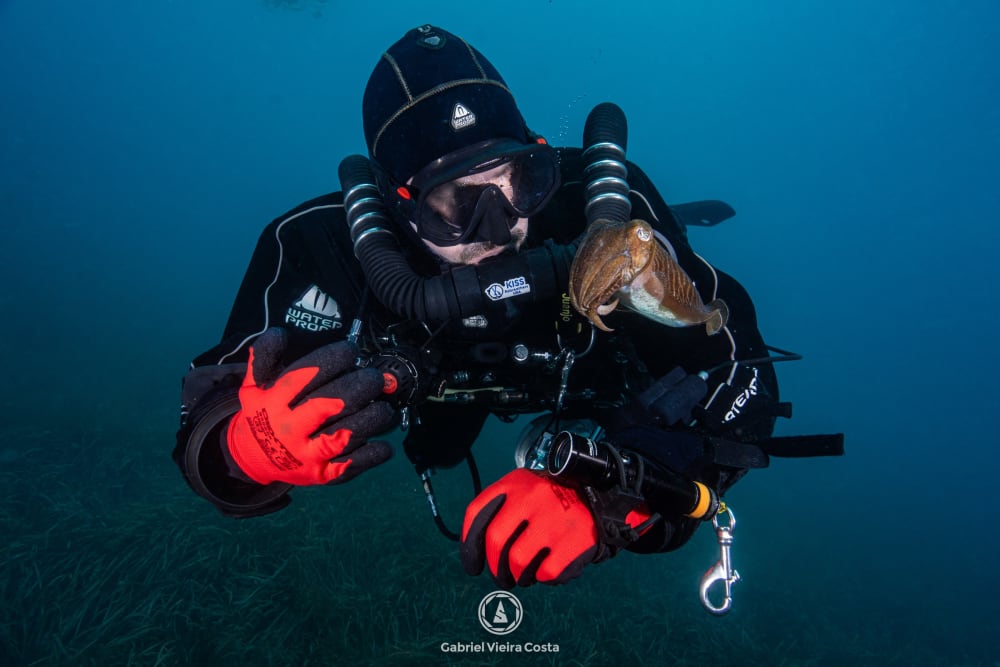
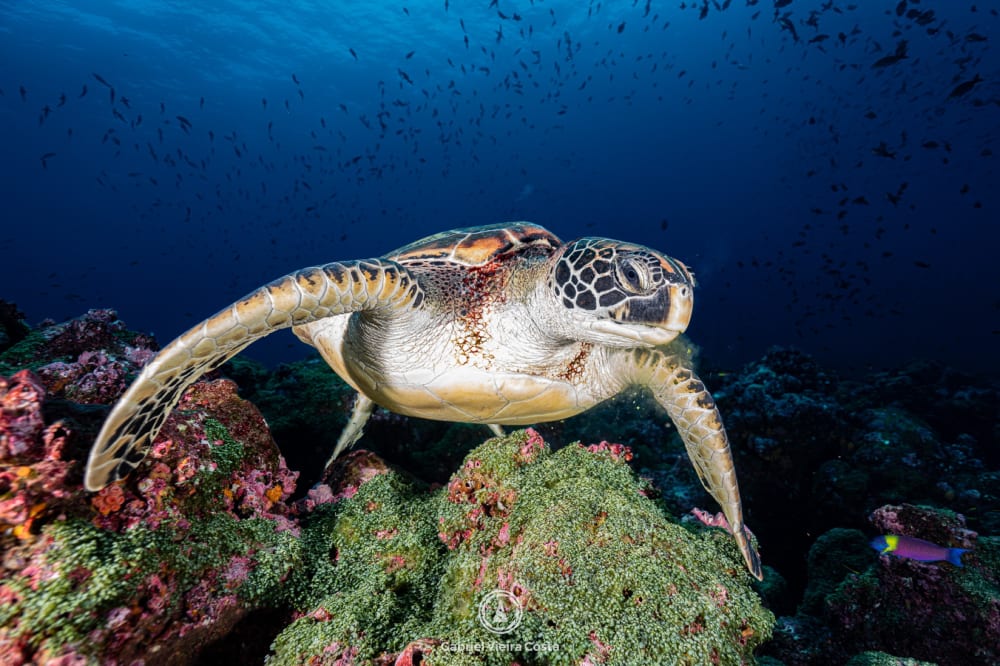
Study the animal's behavior before you get in the water, and talk to the guide. Choose a position on its route, such as a cleaning station, the edge of the reef, or the current. Stay low, breathe slowly, and wait.
- If you swim after it, you only photograph the tail.
- Never block the animal's path.
- The first pass is usually the best one. Be ready.
- The animal decides the distance.
Chasing ruins the photo and the encounter.
Camera ready before it arrives
There will be no time to adjust anything once the animal shows up. Have the exposure for the blue water set and, if you use strobes, low power and arms already in position.
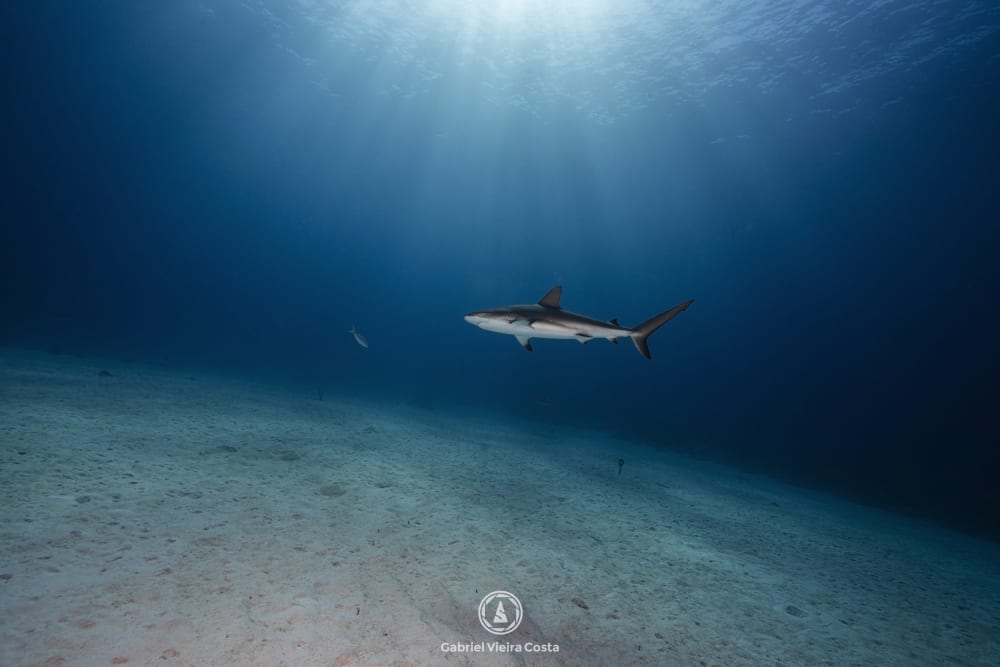
On one dive, a hammerhead shark passed close to me exactly once. Whoever had the camera set got the photo.
The lens is also chosen beforehand, on the boat: you can't change it underwater.
Wide-angle lens and distance
Big animals call for a wide-angle lens: a zoom such as a 16-35 mm or a fisheye, behind a dome port. It exists so the subject can be very close and still fit whole in the frame.
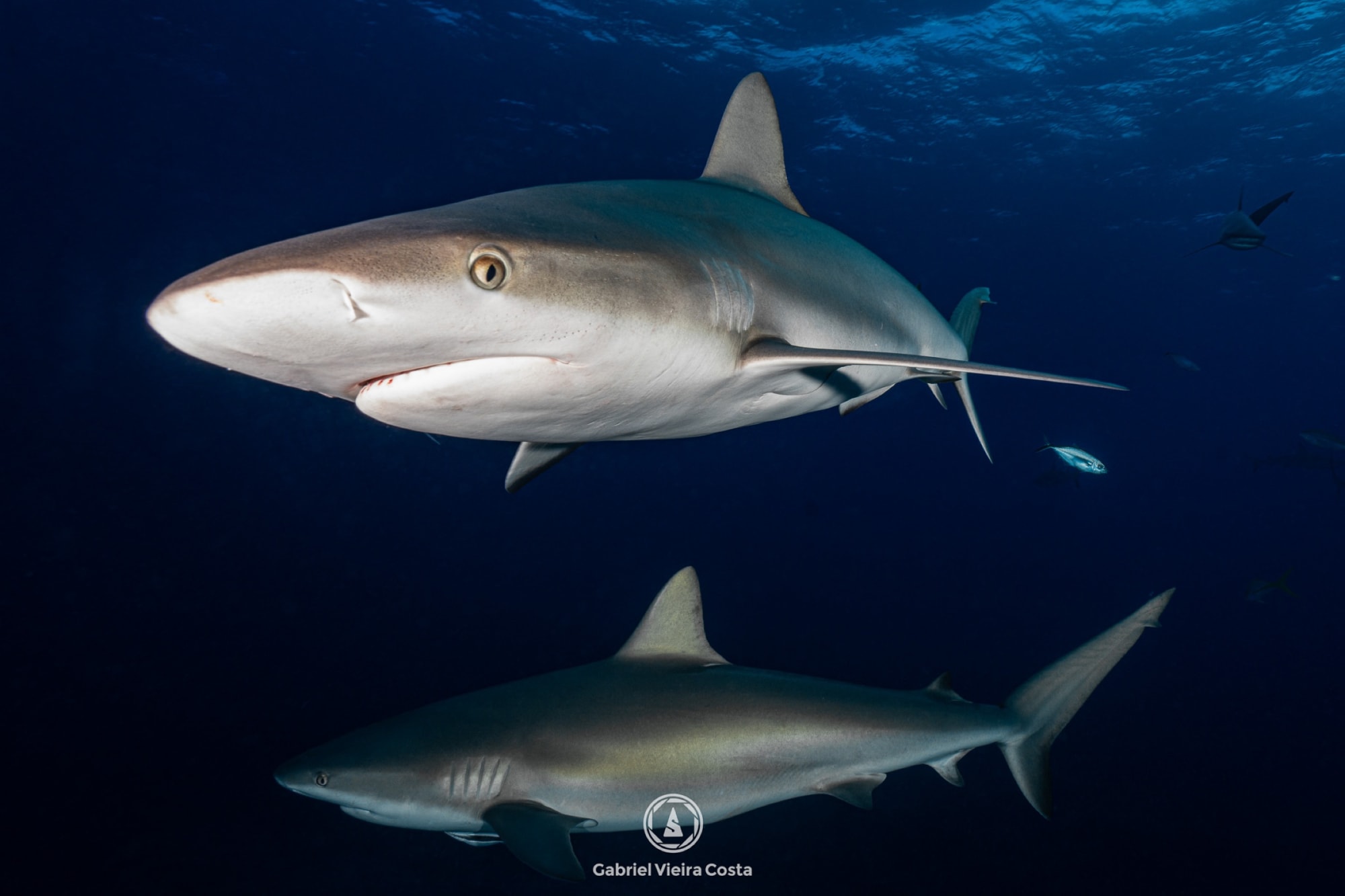
Close makes all the difference. A shark less than a meter (about three feet) from the dome shows color and contrast. At two meters, the same photo turns blue and flat, with backscatter.
That does not mean moving in on the animal. It means being in the right place, holding still, so the animal passes close on its own, within the distance the site and the guide allow.
Daylight or strobes
Strobe light travels to the subject and back to the lens, so distance counts twice. A strobe only works up close, with the subject less than a meter away. Fired at an animal five meters away, it only lights up the particles in the water.
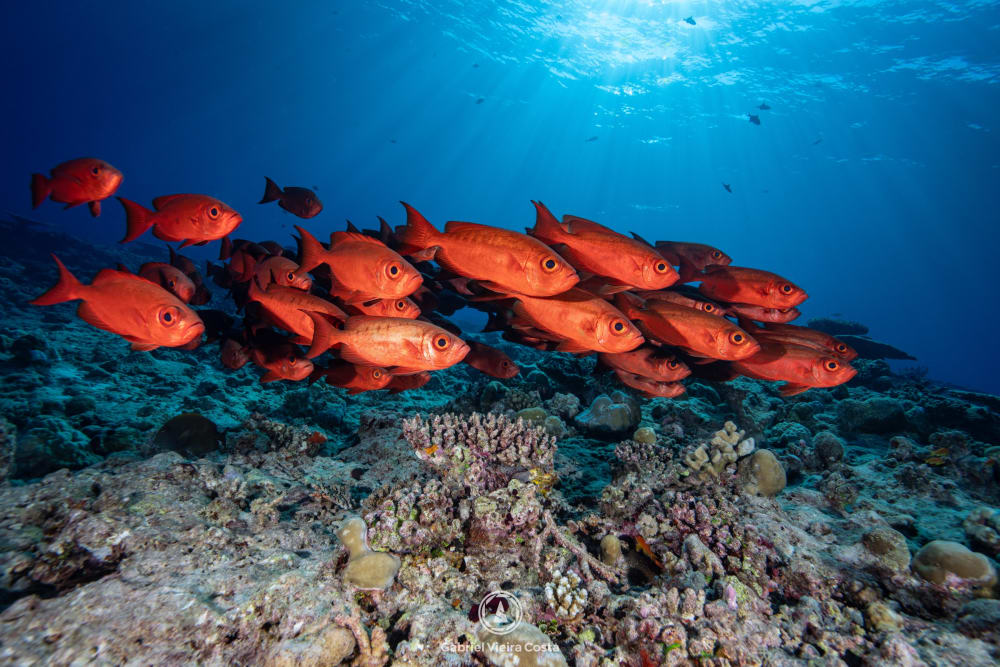
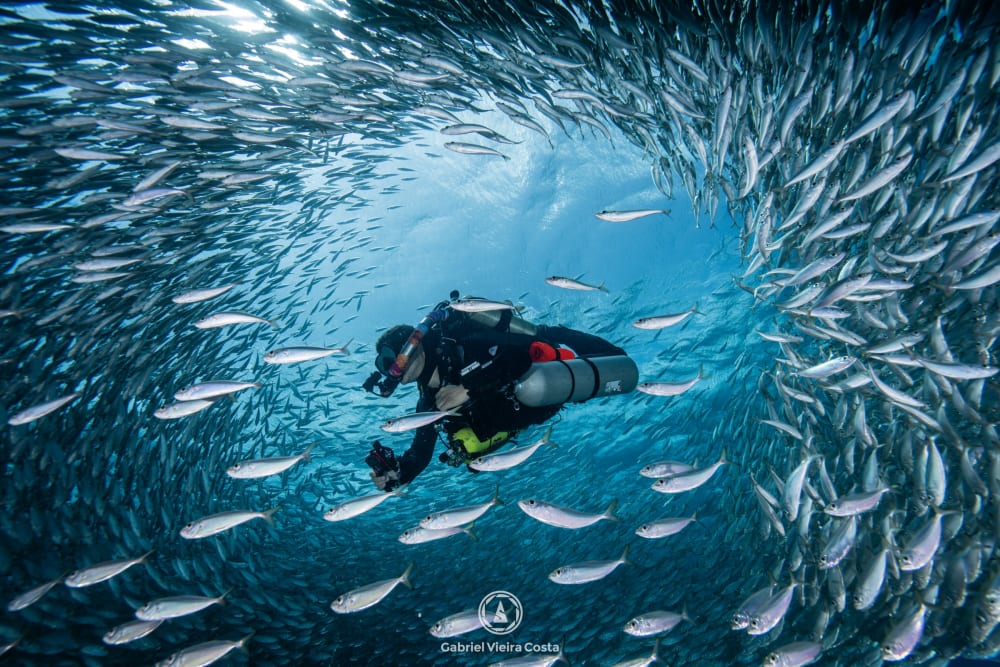
For anything far away, turn the strobes off and expose for daylight: schools of sharks in the blue, whales, walls. The image comes out blue, and that is fine. Open the aperture and keep the shutter speed fast enough to freeze the movement.
Turning the strobe off is also a choice with a skittish animal. And there is the local rule: in many destinations, strobes are forbidden with whale sharks and with other animals.
The background belongs to ambient light. The foreground belongs to the strobe.
Shutter speed: freezing the movement
Shutter speed controls ambient light, which means the blue of the background. Faster shutter, darker blue. Slower shutter, lighter blue. The strobe flash is far quicker than any shutter speed, so what it lights does not change with this setting.
For movement, the reference is simple: slower than 1/60 s the animal blurs, faster than 1/250 s the action freezes. With strobes, stay within your camera's sync speed, usually between 1/160 and 1/250 s.
Angle and composition
With the sun inside the frame, close the aperture, use the fastest shutter speed your sync allows, and hide part of the sun behind the animal.
- From below: get under the animal's line and point slightly up. It stands out against the water and gains size.
- Silhouette: below the animal, pointing at the surface, expose for the bright water. The animal becomes pure outline.
- Space: leave water in front of the animal, in the direction it is swimming. The empty blue around a whale shark is what gives it size.
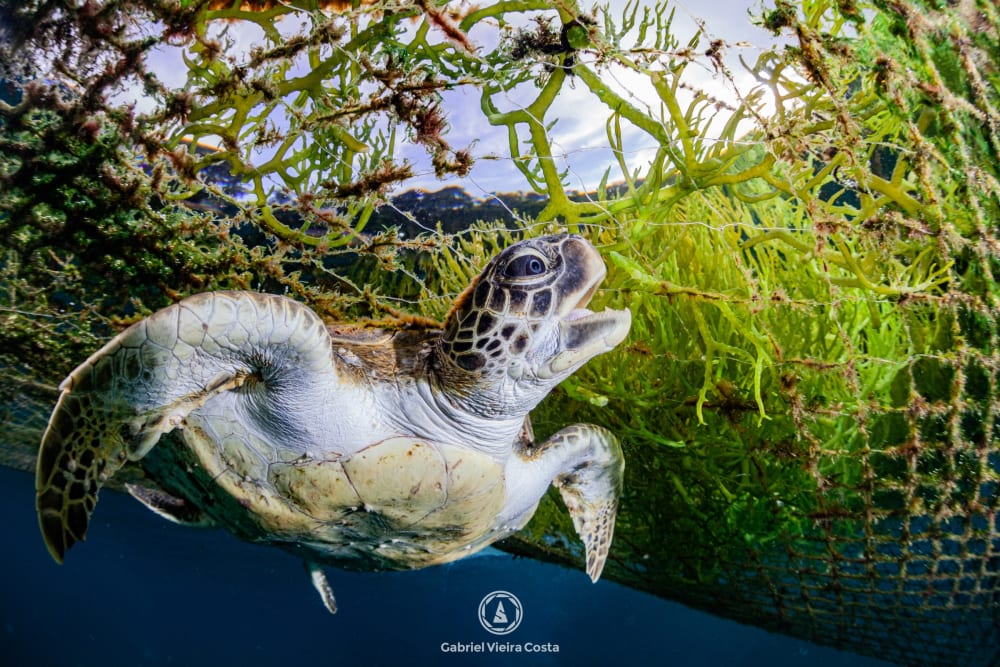
- The moment: an open mouth, a visit to a cleaning station. Behavior is worth more than a portrait, and if you know the animal, you know the gesture repeats.
Respect for the animal, and your own safety
Don't touch, don't move, don't feed. No photo justifies stressing an animal, and serious competitions disqualify images that show signs of manipulation.
Always follow the rules of the site and of the guide on distance and strobe use, even if others don't.
And look after yourself: every time you change subjects, check your air, depth, and time. Take care when ascending behind an animal, because the camera holds your eyes and the ascent gets fast.
The rules of the place are worth more than the photo.
By Gabriel Vieira Costa, underwater photographer, World Top 10 at 35AWARDS 2025 and 2026 and SDI/TDI Instructor Trainer.