What a strobe does underwater
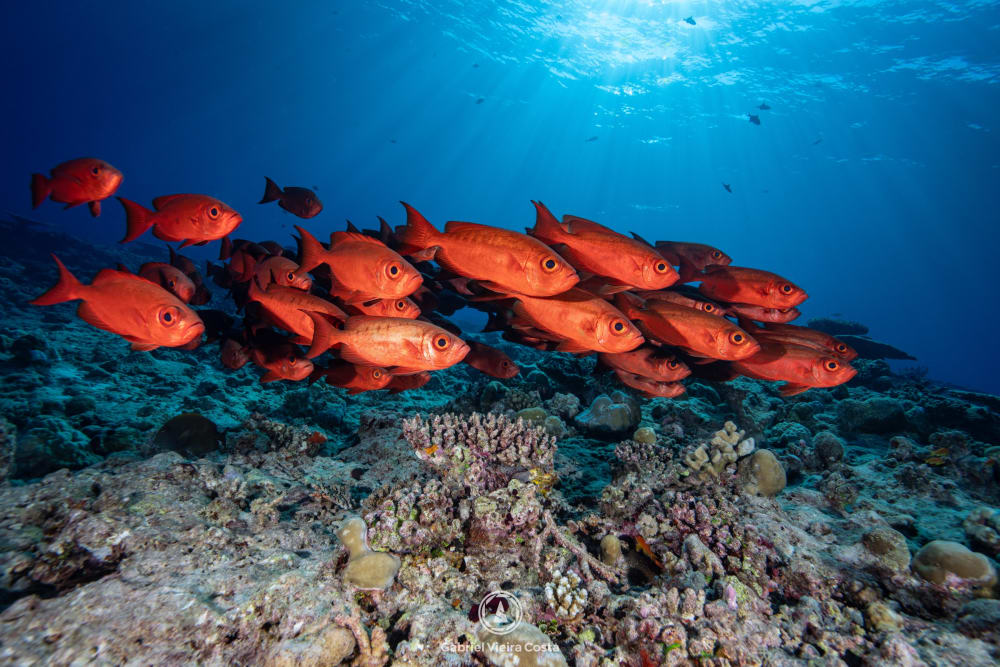
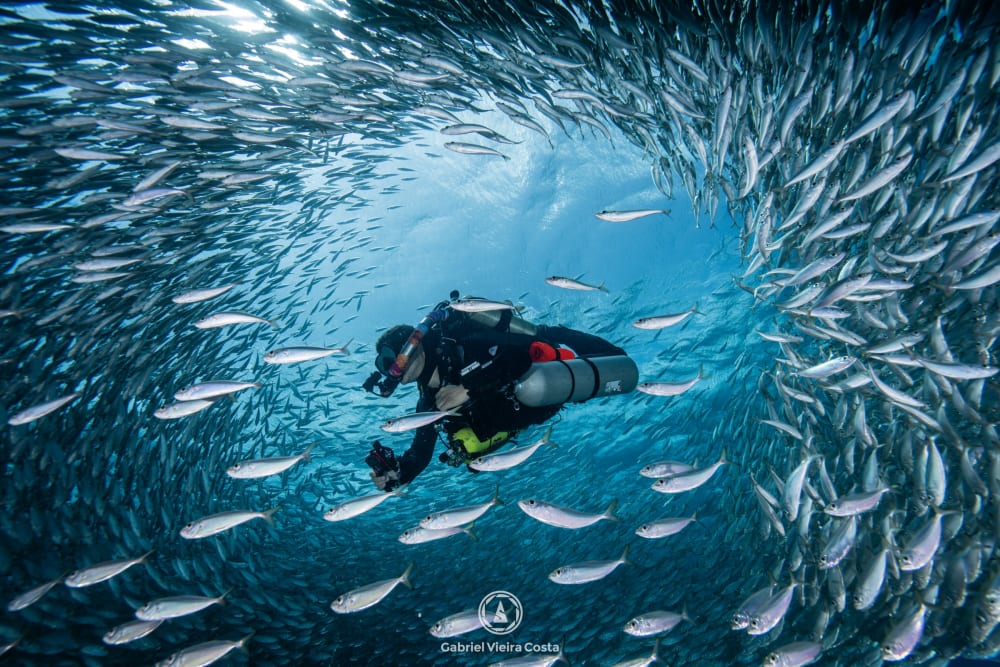
Water absorbs red and orange in the first few meters. The strobe puts that light back. A red school that looked brown, almost gray, to the naked eye comes out red in the photo because the strobe lit it up close.
The problem is distance. Light leaves the camera, travels to the subject, and comes back to the lens: distance counts twice. And it spreads out: double the distance from strobe to subject and only a quarter of the light is left.
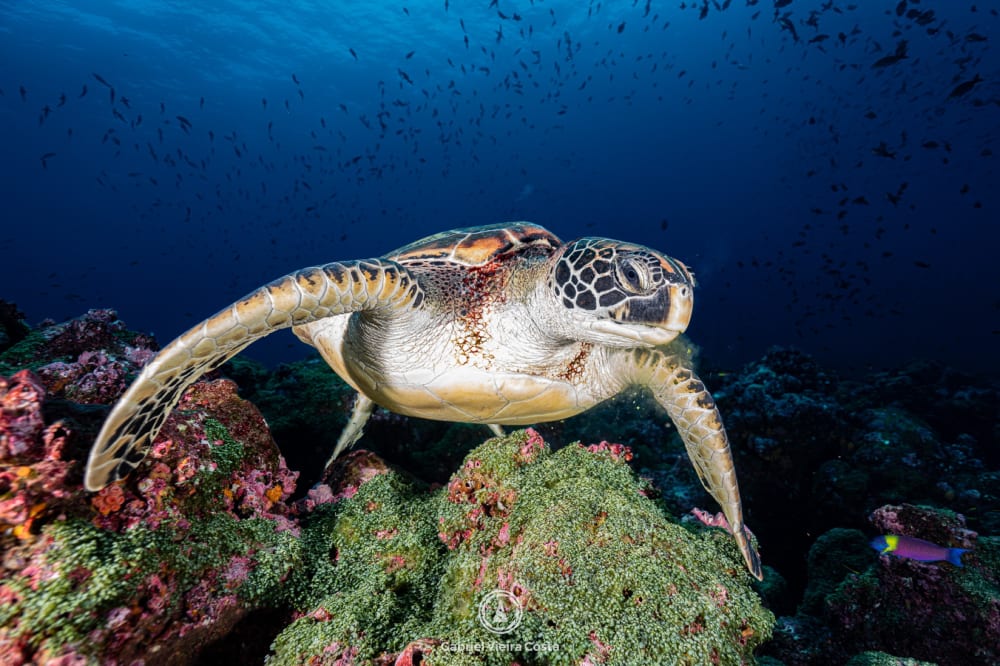
The strobe always belongs to the foreground. In wide angle, the main subject should be less than a meter away, ideally one or two hand spans.
Two exposures in one photo
Every strobe-lit photo underwater has two independent exposures: the background, made by daylight, and the foreground, made by the strobe.
A strobe flash is far shorter than any shutter speed. That is why shutter speed only changes the blue: faster makes it darker, slower makes it lighter. To change only the foreground, use strobe power or distance. Aperture and ISO affect both.
- Strobes off: set aperture and shutter speed until the blue looks the way you want.
- Turn the strobes on and set the power by looking only at the foreground.
- Too bright? Lower the power or move the strobe back. Leave the blue alone.
TTL or manual, and how much power
In TTL, the camera measures the light coming back through the lens and cuts the strobe off when it thinks that's enough. It works well in macro. In wide angle, with lots of blue background, it often gets it wrong.
In manual, the power stays fixed and distance is the only variable. It is the best way to learn, because mistakes teach you. My method: half power, one shot, histogram. Blown out, go down a stop or move back. Too dark, go up or move closer.
Moving the strobe a hand span closer or farther changes more than one click of power.
Where to place arms and strobes for wide angle
No single position works for everything. The question is always the same: what is the shape of the scene, and where is the subject? Picture a clock around the dome.
- Wide out, at ten and two: far apart, pointing straight ahead or slightly outward. The starting position for almost everything.
- Pulled back: behind the line of the dome, for a very close subject and water full of particles.
- One strobe: high and centered. The light resembles sunlight and gives volume.
- Flat scene, like sand or a low reef: strobes above the housing, angled slightly down.
- Bright patch on one side: the center of the beam caught something too close. Pull that strobe back or turn it outward.
Backscatter: the white specks
Backscatter is the particles in the water reflecting strobe light back into the lens. It is the most common flaw in beginners' photos.
It happens when the strobe sits right next to the lens: the light crosses in front of it and every particle becomes a white dot. With the strobes wide and angled outward, only the edge of the beam touches the subject, and the water right in front of the lens stays dark.
- Get closer: less water, fewer particles.
- Don't stir up the bottom.
- Lower the power.
- Never use the camera's built-in flash as your main light.
In macro, the arms get shorter
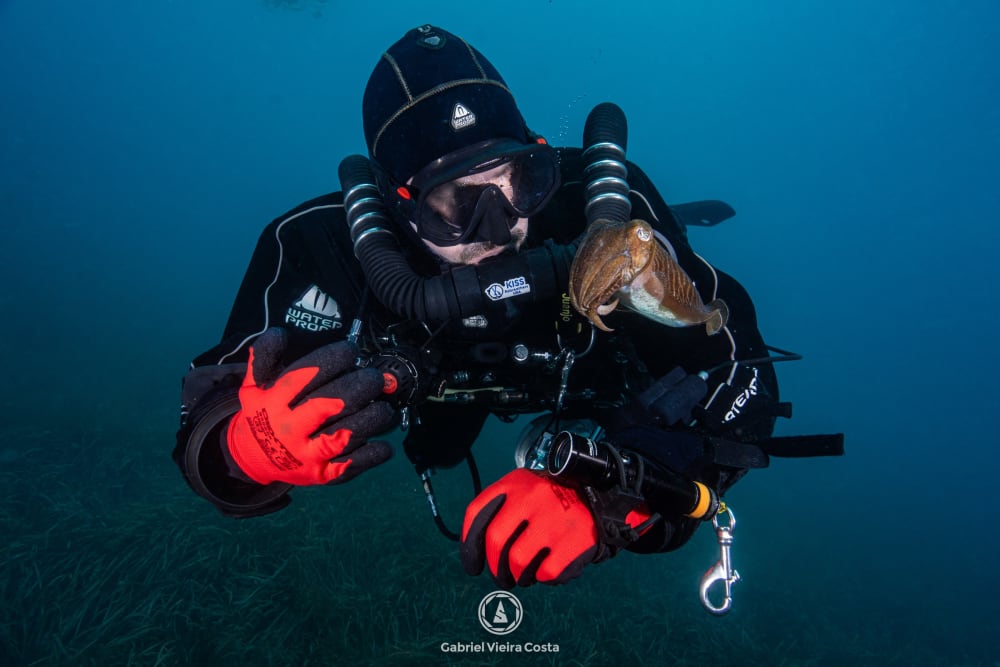
In macro the arms are short and the strobes sit close to the port. The subject stays still and there is little water in the way, which makes macro the best place to learn lighting.
- Facing forward: two strobes beside the port, aimed at the subject. Full light and faithful color.
- Side light: a single strobe, off to one side. The simplest way to gain texture and volume.
- Pointed back: strobes in front of the port, aimed back toward it. The light grazes the subject and never reaches the background.
When not to use a strobe
Switching the strobe off is a choice too.
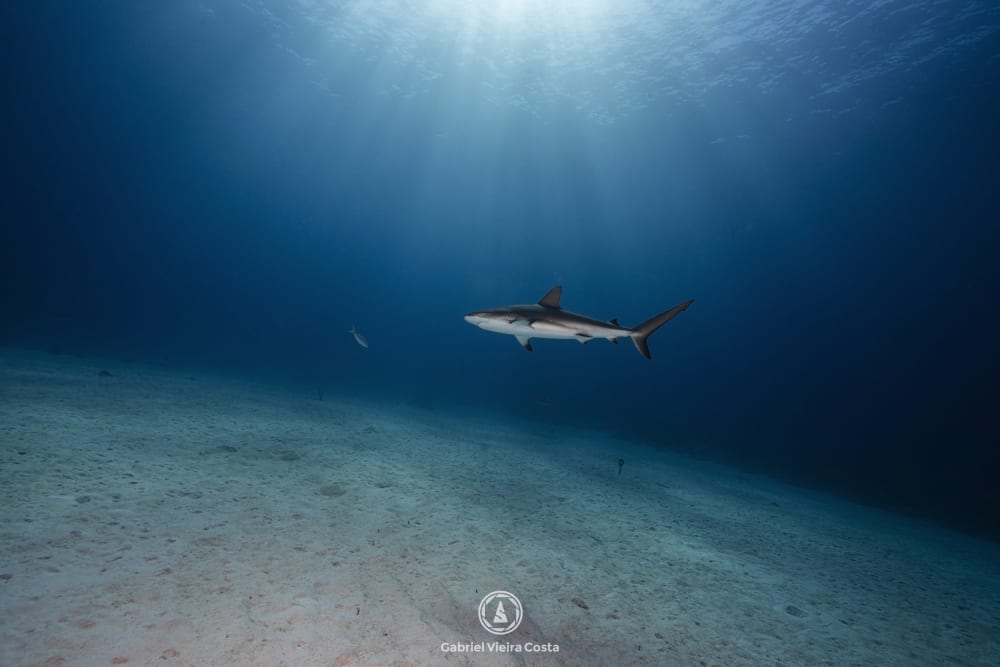
- Distant subjects: schools in the blue, whales, walls. A strobe fired at a subject five meters away only lights up backscatter.
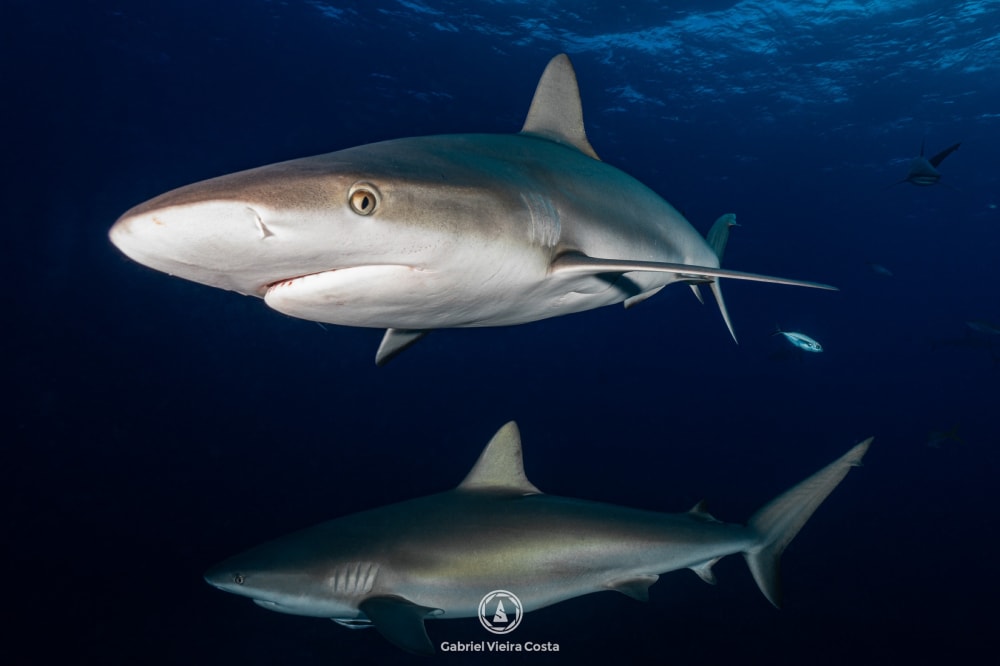
- Local rules: in many destinations strobes are not allowed with whale sharks and other animals. The rules matter more than the photo.
- Skittish animals or large schools.
- Silhouettes: against the sun, the animal becomes an outline and needs no strobe.
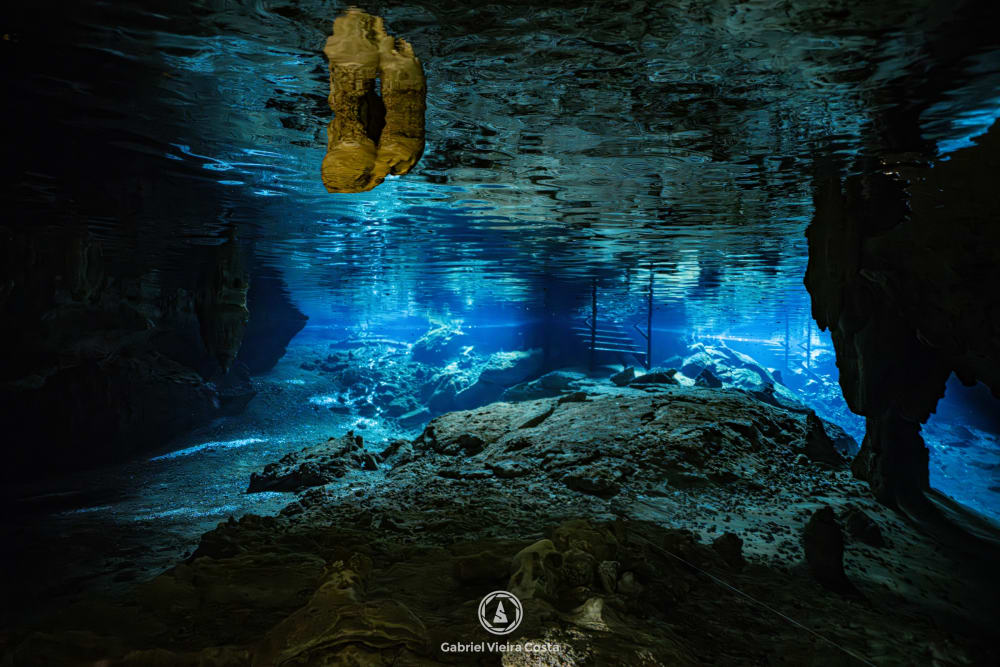
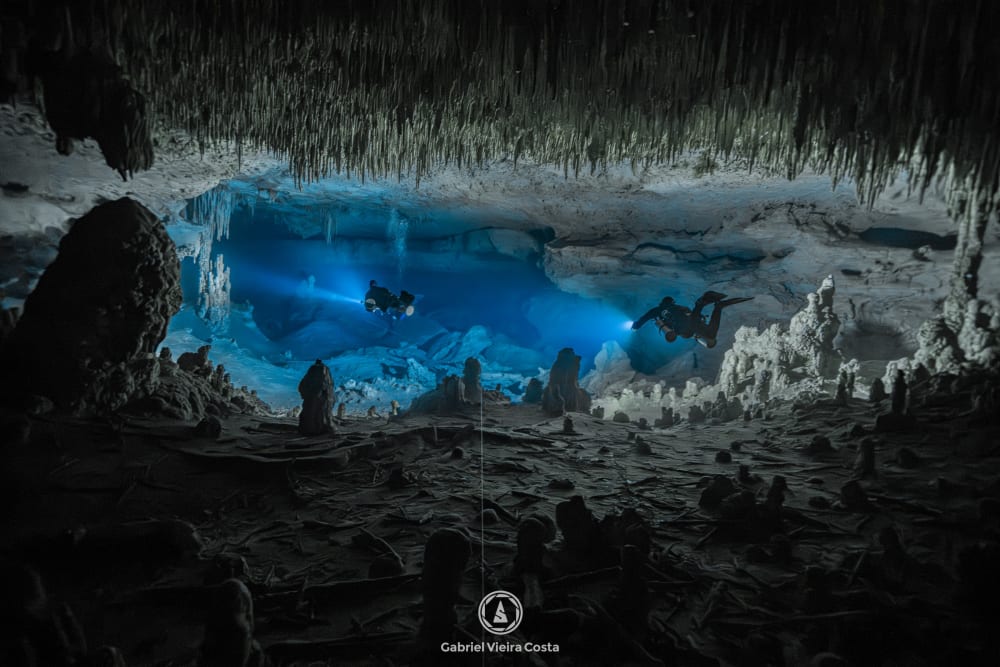
- Caves: the light comes from torches and video lights in the hands of the team. I no longer use strobes in caves.
In blue water, a video light is no substitute for a strobe: it is much weaker and doesn't freeze motion.
By Gabriel Vieira Costa, underwater photographer, World Top 10 at 35AWARDS 2025 and 2026 and SDI/TDI Instructor Trainer.