Laje de Santos: schools, mantas, and open ocean
About 40 km (25 miles) off Santos, two hours by boat, Laje de Santos has been a state marine park since 1993. The walls drop from 15 to more than 35 meters, and in the southern winter the blue water has days of 20 to 25 meters (65 to 80 feet) of visibility.
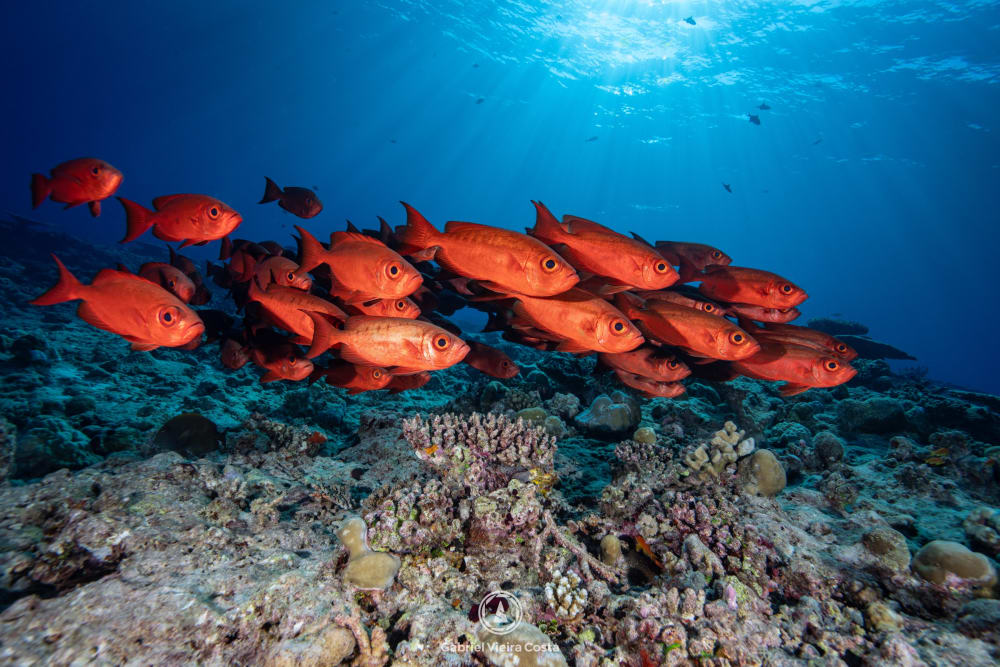
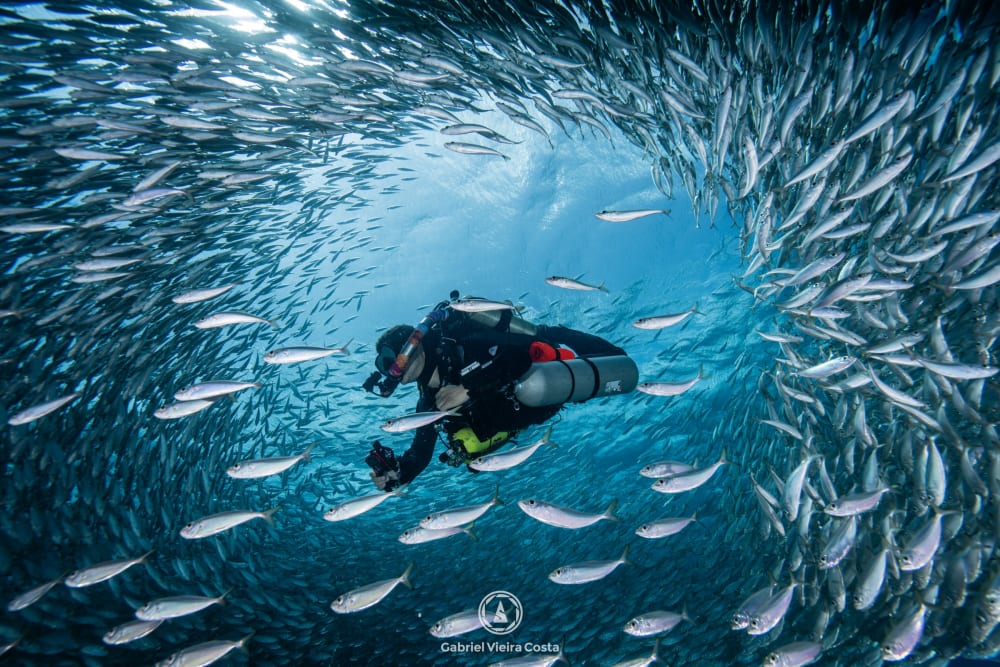
This is wide-angle territory: schools of jacks, grunts, sergeant majors, and porgies, rays, green and hawksbill turtles, groupers in the cracks. From June to September is manta season, and Laje is the most reliable spot in Brazil to see them. Stay low and let the manta come: shot from below, against the surface, it stands out in full.
It is a boat dive with current. On your first visit, consider leaving the camera behind: buoyancy and awareness come before the photo.
Angra dos Reis and Ilha Grande: shallow water on your side
If you are looking for diving in the state of Rio de Janeiro, Ilha Grande Bay is the classic: a sea sheltered by dozens of islands, diveable most of the year, with sites between 8 and 18 meters and water warmer than at Laje.
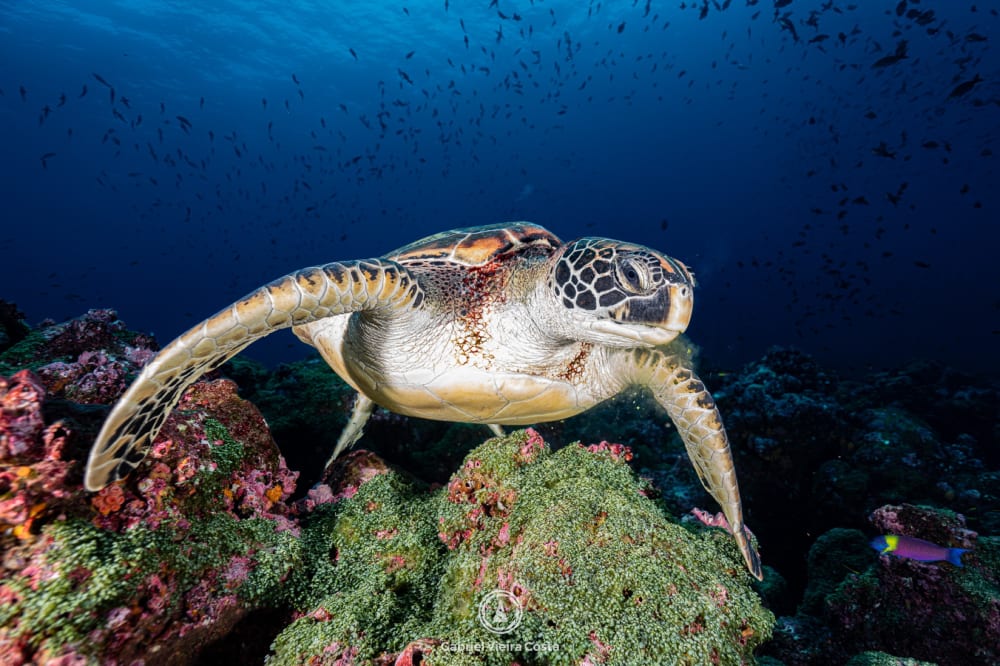
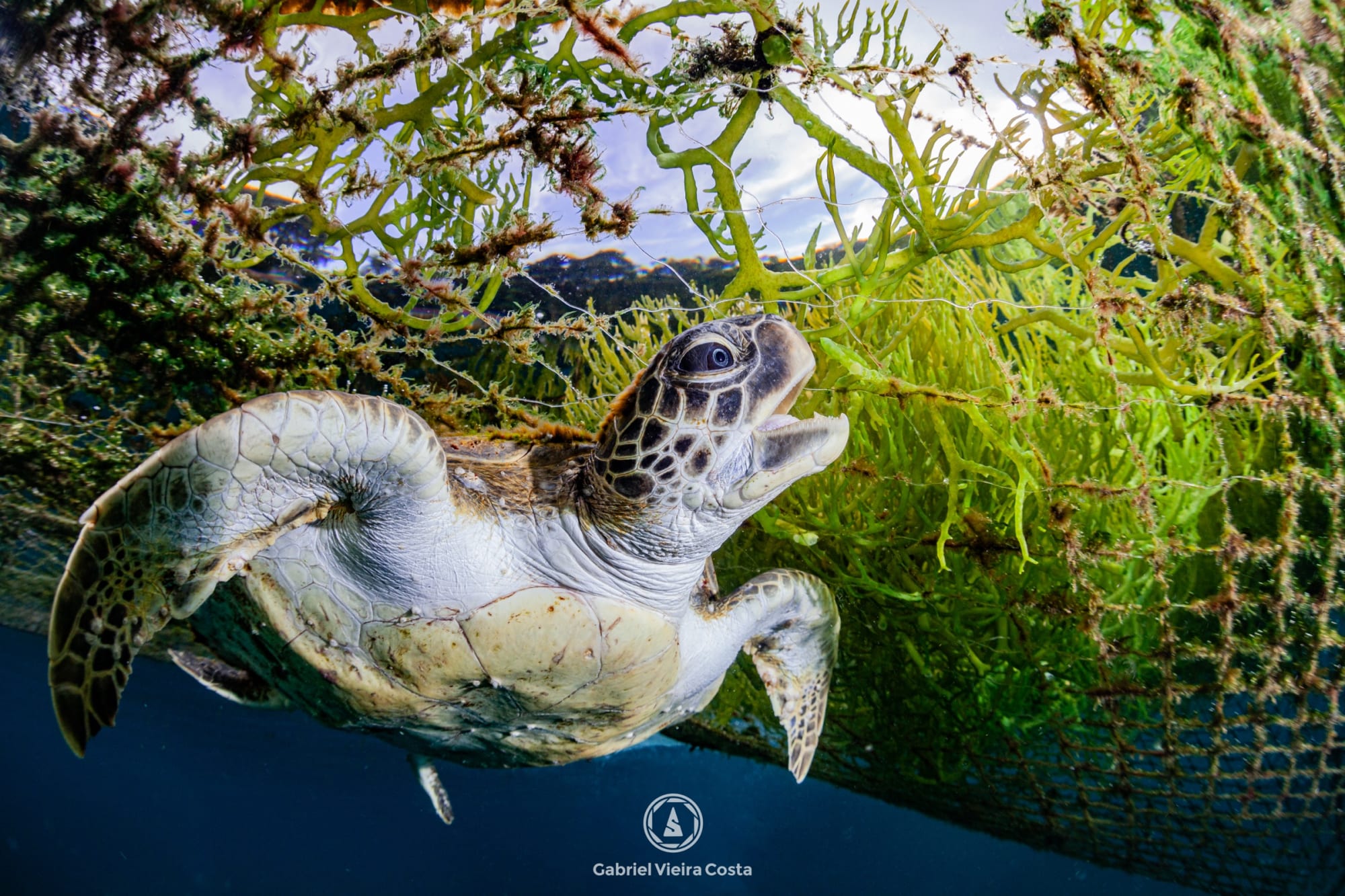
Shallow depth means sunlight on your side. Resident green turtles graze on the rocky shores and are almost a sure thing, great for anyone starting out with a phone or action camera in a housing.
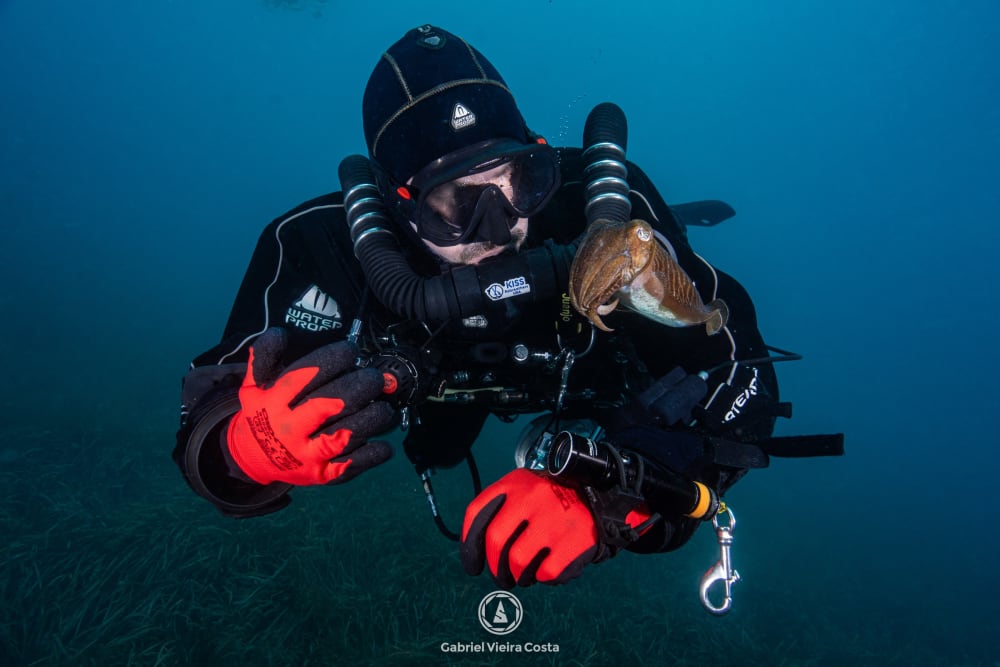
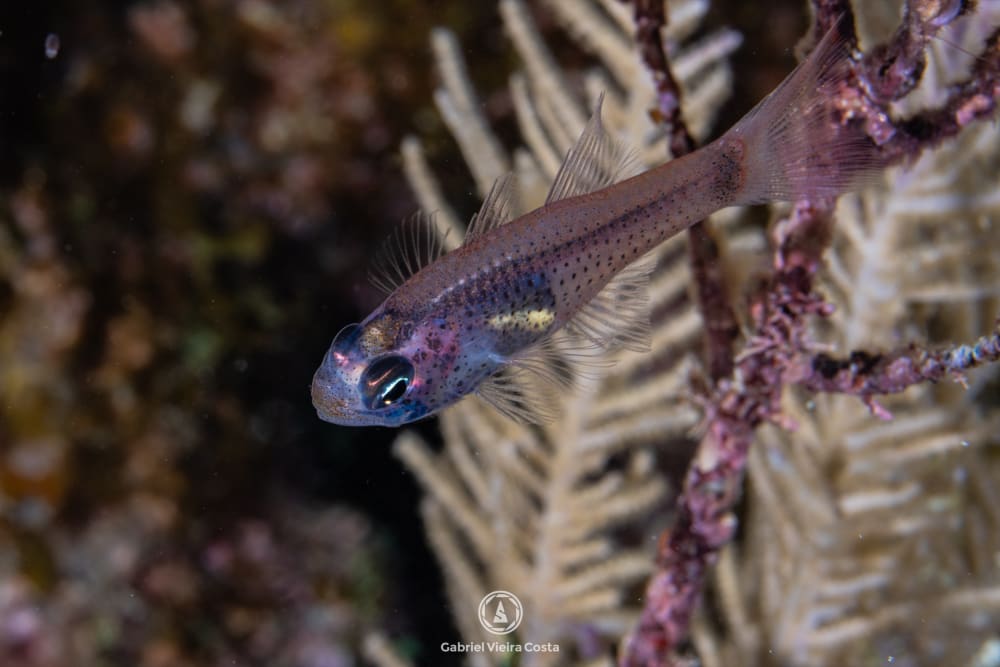
For macro, there are seahorses, octopus, and squid. The night dive is a lesson in cephalopod behavior and the best macro lab there is. Keep your focus light on low or red so you don't scare the animal.
Mar de Fora and Ilhabela: bluer water and wrecks
Mar de Fora is the ocean side of Ilha Grande: more remote sites, water that tends to be cleaner and bluer, cracks and pinnacles swept by current, with schools, turtles, and rays. On a liveaboard, you can dive each site at the best time of day, with the light in your favor.
On the north coast of São Paulo state, Ilhabela has rocky shores, pinnacles, and historic wrecks that have become artificial reefs, covered in life and ringed by fish. Wrecks call for wide angle, and a diver in the frame gives scale.
Fernando de Noronha: visibility, turtles, and sharks
Noronha has Brazil's most famous visibility, 30 to 50 meters (100 to 165 feet) on good days, water around 28 °C (82 °F), and volcanic terrain of boulders, caves, and walls. This is wide angle in truly blue water.
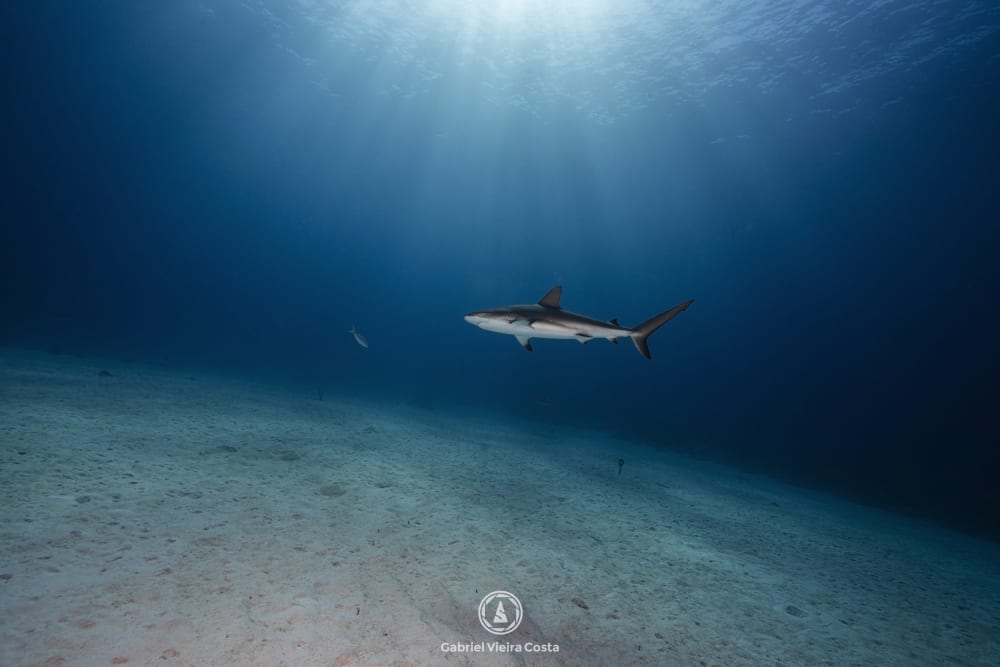
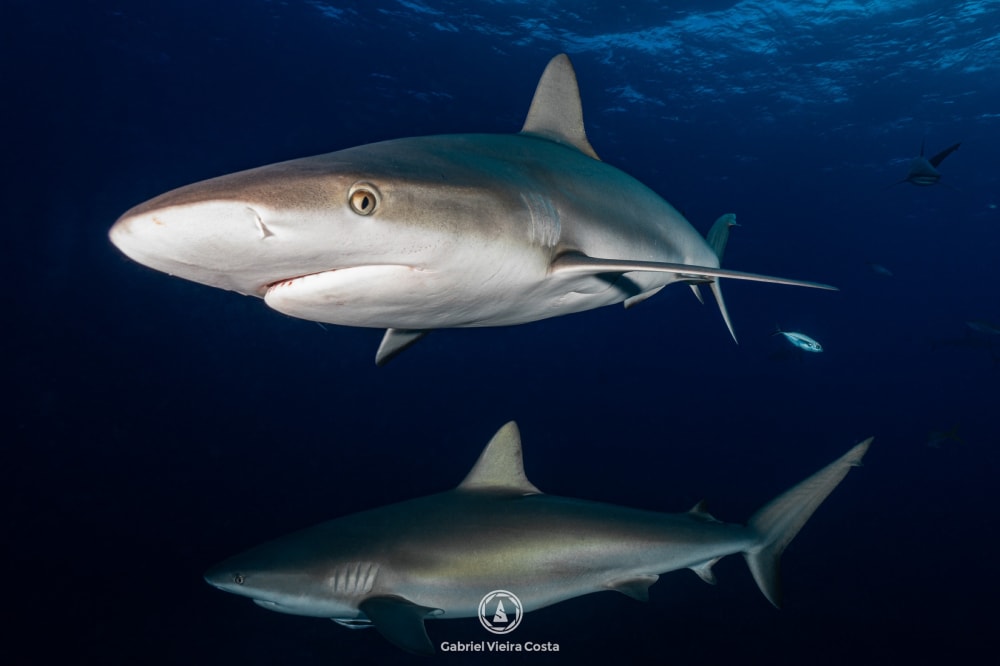
Green and hawksbill turtles show up on almost every dive. Reef sharks and lemon sharks patrol some sites, and nurse sharks rest under the rocks. The Corveta Ipiranga wreck, near 60 meters, is a technical dive.
The best season runs from August to December, especially November: calm seas and warm water.
Photograph sharks calmly: stay low, breathe slowly, and let them come. Don't chase, don't feed, don't touch.
Recife and Natal: the wrecks of the Northeast
Recife is known as Brazil's wreck capital. In its wreck park, the hulls gather nurse sharks, turtles, and seahorses. Natal has wrecks and reefs along the Rio Grande do Norte coast, warm water all year, and sites for every level.
On a wreck, the photo is wide angle: the school around the hull, a diver for scale, shot from below against the surface. Going inside the hull is a different dive that needs its own training.
When to go
In the ocean, visibility changes from one day to the next. Even murky days have their photo: closer, from below, or macro.
- Laje de Santos: June to September, for visibility and mantas.
- Angra and Ilha Grande: all year.
- Ilhabela and the north coast: depends on sea conditions.
- Fernando de Noronha: August to December, especially November.
- Natal: warm water all year.
What to pack
Your dive certification card, which Brazilian Navy rules (NORMAN 15) require on dive boats. Open Water covers most sites in Angra, Ilha Grande, Ilhabela, and Noronha; Laje is better with some experience or Advanced.
- Exposure suit: 5 or 7 mm at Laje in winter, when the water is 19 to 22 °C (66 to 72 °F); 5 mm in Angra; a thin suit in Noronha and Natal.
- Your own mask, fins, and snorkel.
- Dive computer, torch, and surface marker.
- Camera: a tested housing, a lanyard, and a filter or video light if you have no strobe.
- Fresh water to rinse everything afterward. Dried salt jams buttons.
Trips and courses with Dive For Fun, Gabriel's dive school →
By Gabriel Vieira Costa, underwater photographer, World Top 10 at 35AWARDS 2025 and 2026 and SDI/TDI Instructor Trainer.